Hi besties! 💖 I’m your favorite American college senior, living my absolute best life right here in Seoul! Having called this vibrant city home for over 20 years (yes, practically my whole life!), I’ve had a front-row seat to the global explosion of Korean media. Last Sunday, my brand-new husband and I were literally jumping on the couch in our apartment because the K-Pop Demon Hunters Oscars sweep just changed the entertainment game forever.
If you’re wondering why this specific 2026 Academy Awards moment is so revolutionary, you’re in the right place. Let’s dive into the insider perspective on why this isn’t just another win, but a massive structural shift in global pop culture!

1. What the K-Pop Demon Hunters Oscars Win Actually Means
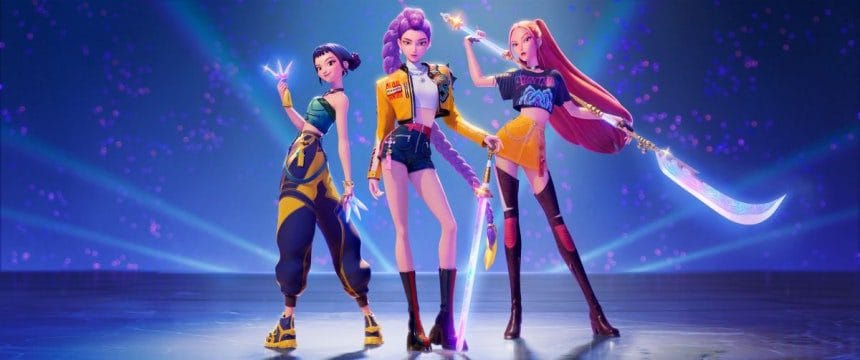
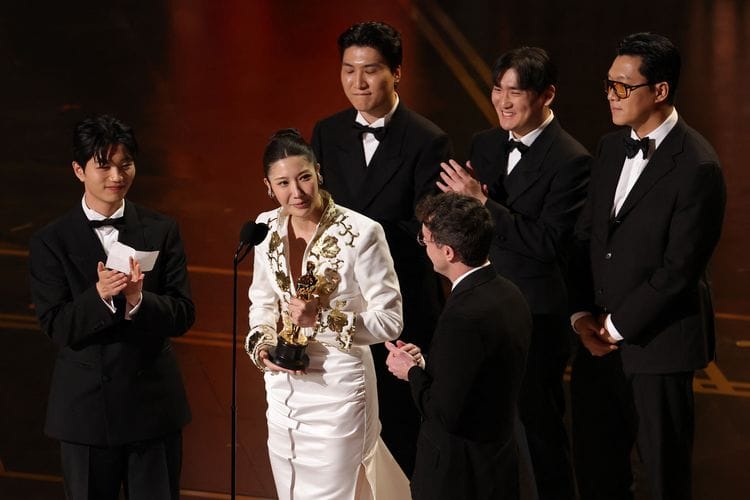
Let’s quickly recap the magic. At the 2026 Academy Awards, Netflix’s mega-hit K-Pop Demon Hunters took home two massive awards: Best Animated Feature and Best Original Song.
Director Maggie Kang made history as the first director of Korean descent to win in the animated feature category. Her acceptance speech had my husband and me in tears. She beautifully stated, “For those of you who look like me, I’m so sorry it took us so long to see ourselves in a movie like this.” Her co-director, Chris Appelhans, added a beautiful sentiment, reminding the world that “music and story have the power to transcend cultures and borders, connecting us all.”
But the real showstopper? The track “Golden” became the first K-pop style song to ever win an Oscar! The artist and composer, EJAE, delivered a speech that perfectly captured the Gen Z cultural zeitgeist: “Growing up, people made fun of me for liking K-pop, but now everyone is singing our songs and singing along to the Korean lyrics. I realize this award isn’t just about success—it’s about the power to endure and recover.” ## 2. Shattering Records: Beyond the Netflix Algorithm
We all know the movie is an absolute bop, but the numbers are mind-blowing. As of January 2026, K-Pop Demon Hunters officially became the #1 most-viewed content in Netflix history, racking up a staggering 540 million cumulative views.
Living in Seoul as a newlywed, I can tell you firsthand that the city is breathing this movie right now. Walking through Hongdae or grabbing an iced Americano in Seongsu-dong, you literally cannot escape the soundtrack. It’s no surprise that 8 songs from the movie simultaneously charted on the Billboard Hot 100! But the real question people keep asking is: Is this an American movie or a Korean movie? Honestly, as a local insider, I think we need to stop asking that question entirely.
3. The 7-Year Golden Era: A K-Culture Timeline
To understand the magnitude of this moment, we have to look back. Over the last seven years, we haven’t just seen a few lucky breaks; we’ve witnessed a calculated, simultaneous domination of every major cultural sector globally.
Why These Global Milestones Set the Stage
Just look at this legendary timeline of Korean soft power:
- 2020: Parasite sweeps the Oscars with 4 historic wins.
- 2021: Youn Yuh-jung wins Best Supporting Actress for Minari.
- 2022: Squid Game takes home 6 Emmy Awards, while Decision to Leave (Park Chan-wook) and Broker (Song Kang-ho) win Best Director and Best Actor at the Cannes Film Festival.
- 2024: Author Han Kang wins the Nobel Prize in Literature, K-Pop is named Spotify’s most-streamed global genre, and Solo Leveling takes the Grand Prize at the World Webtoon Awards.
These aren’t isolated events anymore. Korean content is no longer a “single exceptional hit”—it’s a structural phenomenon conquering film, TV, music, literature, and webtoons all at once.

4. Hollywood’s New Blueprint: The Global IP Business
Here is the insider tea that most travel guides and pop culture blogs are missing: we need to change how we talk about Korean media. We used to focus on “how well a Korean product exported globally” or “what rank it achieved.” Today, those questions are practically meaningless.
What the K-Pop Demon Hunters Oscars victory truly represents is South Korea’s full-scale entry into the global IP (Intellectual Property) business system. We aren’t just exporting a finished “cultural product” anymore. Instead, the core elements of Korean culture—our mythology, our aesthetic, our distinct storytelling, and our contemporary Gen Z energy—are being adopted by major Hollywood studios right from the initial planning stages.
Sony Pictures Animation didn’t just buy a Korean movie; they built a global blockbuster around the Korean cultural DNA.
5. My Life in Seoul: Feeling the Cultural Shift
As an American who has spent two decades in Seoul, navigating college finals and navigating newlywed life, I can feel this shift in the air. We aren’t just watching a trend; we are living inside the new baseline for global entertainment. Korean culture is no longer just an “influence”—it is a fundamental building block of the worldwide IP business.
Have you watched the movie yet? Let me know your favorite song from the soundtrack in the comments below, and stay tuned for more of my insider Seoul diaries! ✨