
You know the scene, even if you’ve never set foot in Korea. Two exhausted office workers in wrinkled button-downs collapse onto red plastic stools at a street tent bar, clink shot glasses of clear liquor, and toss them back before the ink on today’s spreadsheet even dries. It’s in every K-drama from Reply 1988 to Twenty-Five Twenty-One, shorthand for stress, bonding, and Korean nightlife itself. Except that scene is quietly going extinct. Korea’s drinking culture — soju bombs, mandatory work dinners, the whole “one shot, everybody together” ritual — is collapsing, and Gen Z is the one pulling the plug.
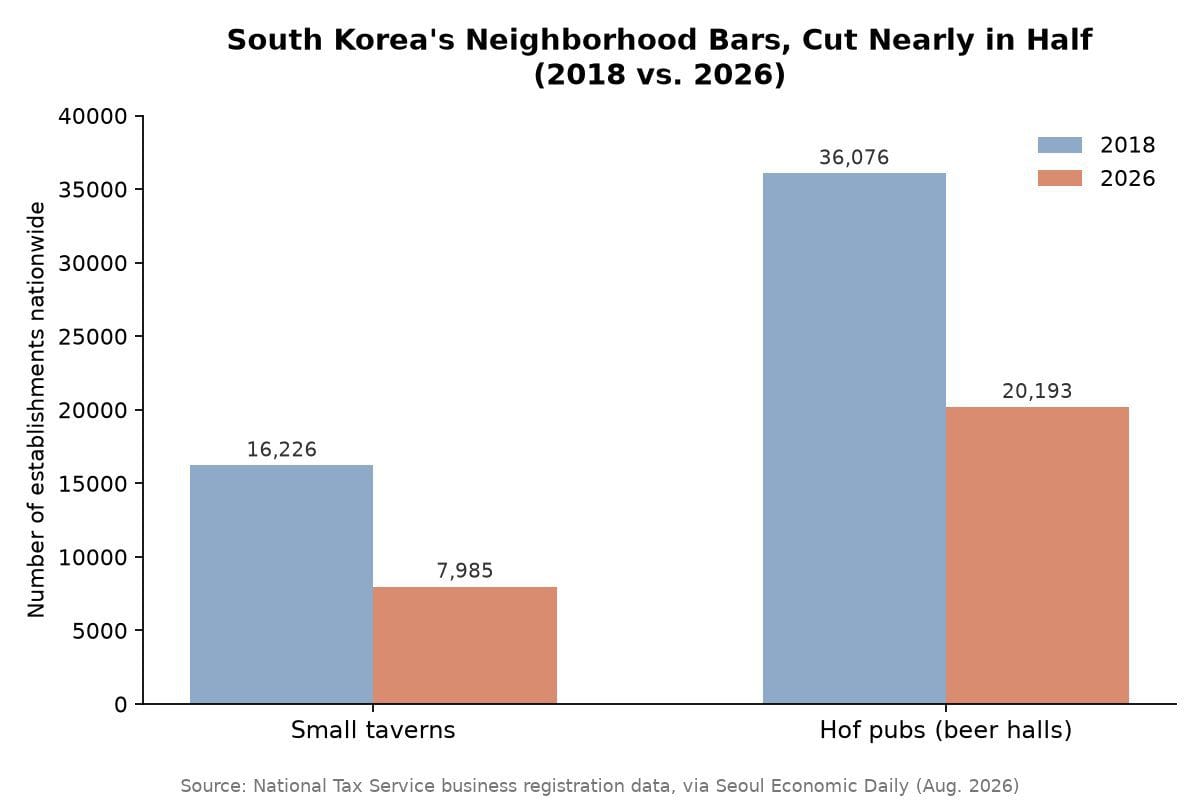
Here’s the part that made me put my coffee down: according to Seoul Economic Daily’s analysis of National Tax Service business registration data, the number of bars nationwide fell from 52,302 in 2018 to 28,178 in 2026 — a 46.1% drop in eight years. Small neighborhood taverns went from 16,226 to 7,985. Hof pubs, the classic Korean beer-and-fried-chicken spots, dropped from 36,076 to 20,193. And this isn’t a slow fade — hof pubs alone fell another 9.1% in just the past year.
It’s not just closures — it’s an entire generation opting out before they even start. A Korea Times-cited survey of 1,347 Gen Z job seekers by the recruiting platform Catch found 42% don’t drink at all, and among those who do, 63% say they stop at a mild buzz and only 8% ever drink to the point of being fully drunk. Separately, 56% of Koreans aged 19-29 now abstain entirely or drink no more than once a month — the highest share since national tracking began in 2005, when that number sat at 37.9%.
Wait, Why Did Hoesik Even Matter So Much?
Hoesik (회식) is the mandatory-feeling after-work dinner-and-drinks ritual that’s been baked into Korean office culture for decades — showing up, matching your boss shot-for-shot, was basically a loyalty test. It’s a huge reason chimaek (fried chicken + beer) became a national comfort food, and why soju became the best-selling liquor on Earth by volume. But COVID-19 physically shut hoesik down for two years, and Korea Times reports that gap never fully closed back up. One 20-something told the paper, “Bragging about drinking feels thoughtless now,” while another put it more plainly: “I do it because I actually want to — not out of force.” That’s a real generational pivot, from drinking as a social obligation to drinking as an optional, individual choice.

It’s Not Just Willpower — the Soju Got Weaker Too
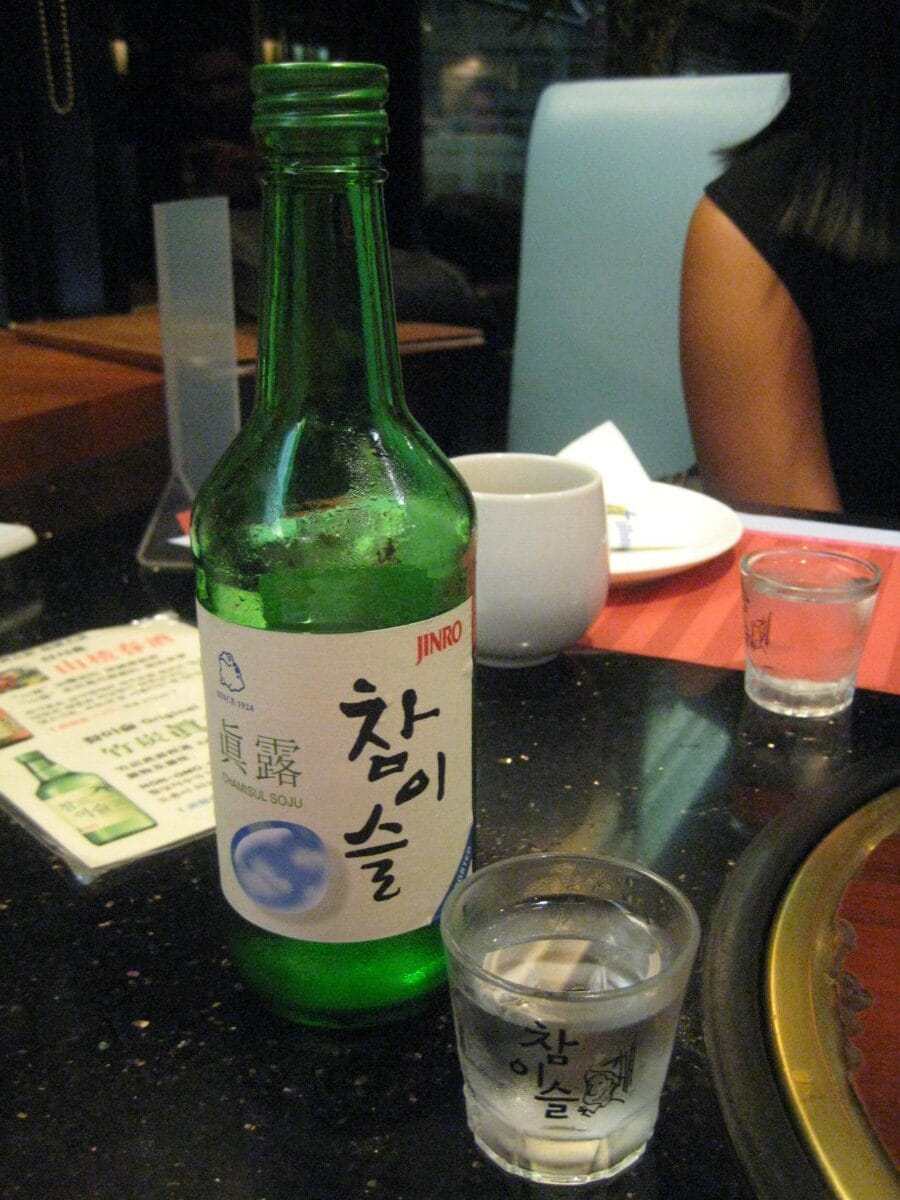
Even the drink itself is adjusting to the new normal. Major brands quietly cut their alcohol content — Chum Churum went from 16.5% to 16%, and Chamisul and Jinro both dropped to 16% as well. Meanwhile the nonalcoholic beer market grew 55.2% between 2021 and 2023, from 41.5 billion to 64.4 billion won, and is projected to hit 94.6 billion won by 2027. Domestic liquor shipments fell 5.2% in 2025 versus 2024, wine imports dropped 7.5% by value, and HiteJinro’s Q2 beer revenue slid from 208.1 billion to 176.3 billion won. Lotte Chilsung’s beer revenue reportedly fell around 30% in the same quarter. When the industry itself is watering down its flagship product and pouring R&D into zero-proof options, that’s not a fad — that’s a market responding to where the money actually went.

Korea Isn’t Alone, But It’s Moving Faster
If this sounds familiar, it should — American Gen Z is doing a version of the same thing (roughly half of U.S. adults 18-34 now drink, down more than 20 points from historical norms), and Japan has its own version called osake-banare, or “drifting from alcohol.” What makes Korea’s case worth watching is the speed and the specific reason: this wasn’t a slow cultural drift, it was a mandatory ritual (hoesik) that got physically suspended by COVID and never fully came back, layered on top of a broader 2020s shift toward health tracking, self-management, and treating your own time as something worth spending intentionally rather than performing commitment with a shot glass.

So, Is Korea’s Drinking Culture Actually Over?
Not dead, but definitely demoted. Chimaek isn’t disappearing — 64% of surveyed Gen Z still consider gatherings with coworkers necessary, they just want them shorter (29% prefer a brisk one-hour hangout) and without the “you have to drink to belong” pressure that 41% flagged as the worst part of the old system. If you’re planning a Korea trip expecting every night to end in a soju-fueled blur like your favorite drama, adjust your expectations: you’re just as likely to end up at a nonalcoholic beer bar or a 24-hour cafe. Which, honestly, as someone who has never once successfully done a soju bomb without spilling it everywhere? Kind of a relief.
you might also like

Sources: