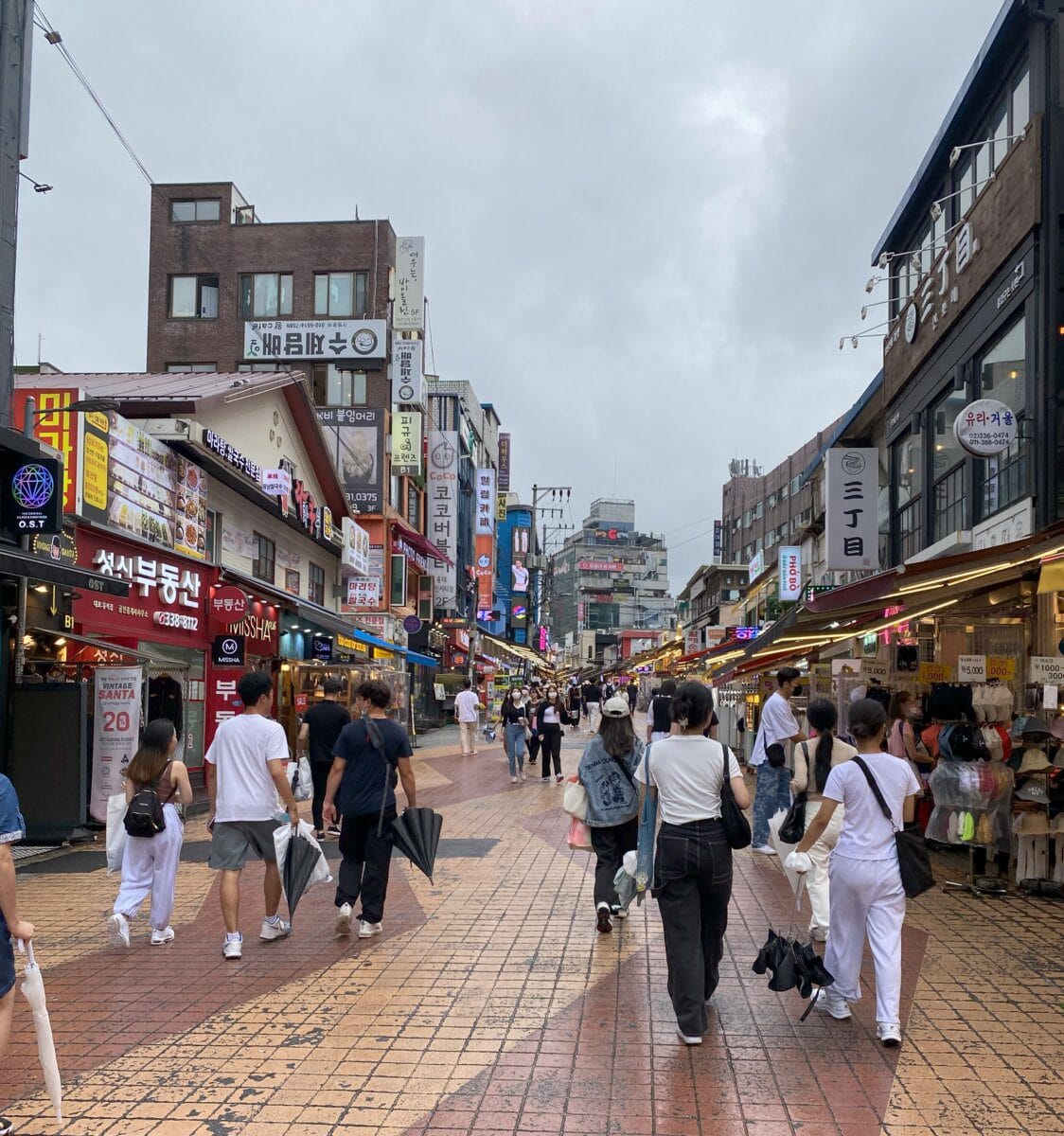
So I was three minutes into a Korean variety clip of a 24-year-old idol doing her weekly grocery run with her mom — matching bucket hats, one shared card, zero irony — when I scrolled to the comments and every single one was some version of “same energy as me and my mom fr.” Not “aw cute.” Not “this is sad.” Just recognition. That’s when I learned the word eommisae (엄미새), and once you know it, you cannot unsee it plastered across Korean social media right now.
Loosely, eommisae means “someone who’s completely obsessed with their mom” — and unlike “mama’s boy,” which nobody wants stitched into their dating profile, this one’s worn like a badge. Koreans in their teens and twenties are posting shopping trips, restaurant dates and vacations with their moms, captioned like she’s their situationship. Wholesome internet moment, or something bigger? Both, honestly. Here’s the breakdown.

What Does “Eommisae” Actually Mean?
The word mashes eomma (mom) with the suffix from docksae, Korean slang for being hopelessly hooked on something — the same root used in K-pop fandom slang. So eommisae literally lands as “mom-addicted.” A 2026 Embrain Trend Monitor family-relations survey found 48.5% of Koreans already recognize the term, jumping to 55.5% among teens and 63.0% among people in their twenties. That’s not a fringe meme — that’s a mainstream generational identity marker.
Wait, Isn’t This Just “Failure to Launch” With Extra Steps?
I thought the same thing, but the numbers track a real structural shift, not just vibes. Per the Korea Times, the share of Koreans aged 19–34 living with their parents climbed from 46% in 2000 to 54.4% in 2024. In the US, 18–29-year-olds living at home peaked at 52% in mid-2020, per Pew Research — the highest since the actual Great Depression’s 48% in 1940, and that took a global pandemic. Korea’s number is now higher than America’s pandemic peak, permanently, no lockdown required.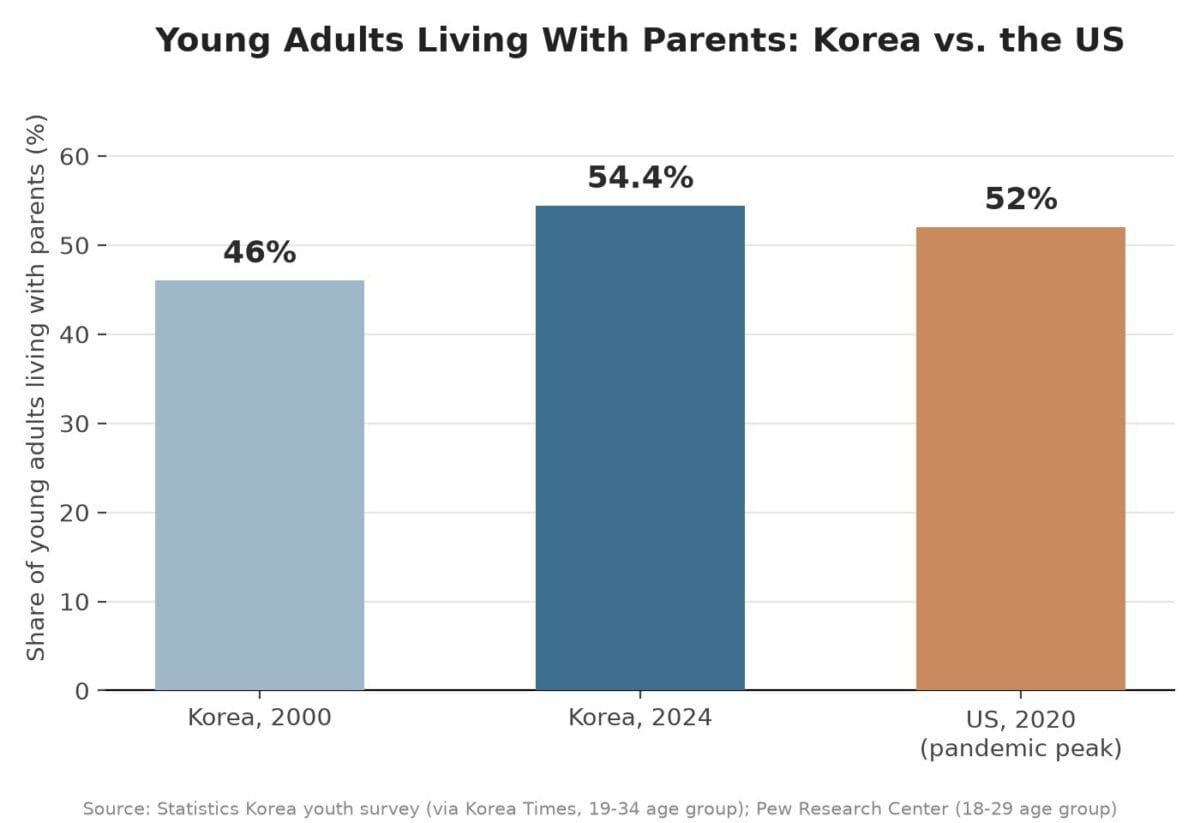
So Why Is This Suddenly a Whole Thing?
Money, mostly. Of Koreans who recognize the eommisae trend, “employment and economic anxiety” was the top-cited driver (34.5%, multiple responses allowed). Among young Koreans still at home, 56.6% blame affordability directly, and only 38% even have a plan to eventually move out. Seoul’s housing costs and a brutal job market turned “moving out at 22” from a rite of passage into a fantasy — so this generation reframed staying home as closeness instead of failure.
Is It Only About the Money, Though?
Not entirely. Roughly 65.5% of unmarried Koreans aged 19–34 report not currently dating anyone, and about 70% of that group say they’re single by choice. Pair a housing crunch with dating fatigue, and mom becomes the low-stakes, high-trust relationship that’s actually available: no ghosting, no talking stage, just someone who’ll split tteokbokki with you on a random Tuesday.
Do Older Koreans Think This Is Cute or Concerning?
Split down generational lines, which is the most interesting part. Young people mostly frame it as “fun meme culture” (28.8%). Parents are less charmed — 31.5% of people in their 40s and 35.0% in their 50s call the same behavior “excessive dependence.” The same shopping-trip video reads as heartwarming to a 22-year-old and a red flag to their aunt.
Are Brands Cashing In?
Immediately. Korean companies are running “mom marketing” — Charles & Keith and Pulmuone campaigns built around mother-daughter content and ad copy leaning straight into the eommisae aesthetic instead of the usual romance-coded playbook. When slang shows up in ad briefs months after going viral, the trend has landed, not just trended.
Why This Actually Matters
It’s easy to read eommisae as a wholesome, funny internet moment, and on the surface it is. But it’s a symptom dressed up as an aesthetic: a generation priced out of independence, opting out of dating culture, finding warmth in the one relationship that isn’t conditional on rent money or a right-swipe. Korea’s birth rate and marriage rate are already the lowest in the developed world, and this is what that looks like from the inside — not despair, but a rebrand. Whether you find it sweet or slightly alarming probably depends on how old you are, which is kind of the whole point.